


Veterinarian Salary Survey
United States - Below
USA
July 2026 Update
Compensation transparency benefits everyone in the veterinary profession.
- Practice owners gain the market intelligence needed to build competitive packages that attract and retain quality teams.
- Veterinary professionals gain clarity on their earning potential and career trajectory.
Our salary survey bridges this information gap, providing twice-yearly benchmark data across entry-level, mid-career, and senior positions. Whether you’re planning your practice’s compensation strategy or seeking to understand your position in the market, you’ll have the data you need to make informed decisions…
Connect With Your Next Team Members
Explore our latest July 2026 Veterinarian Salary Survey for the USA…
[ Scroll to the end of the page to learn about our Methodology ]
United States – July 2026
🏥 For employers
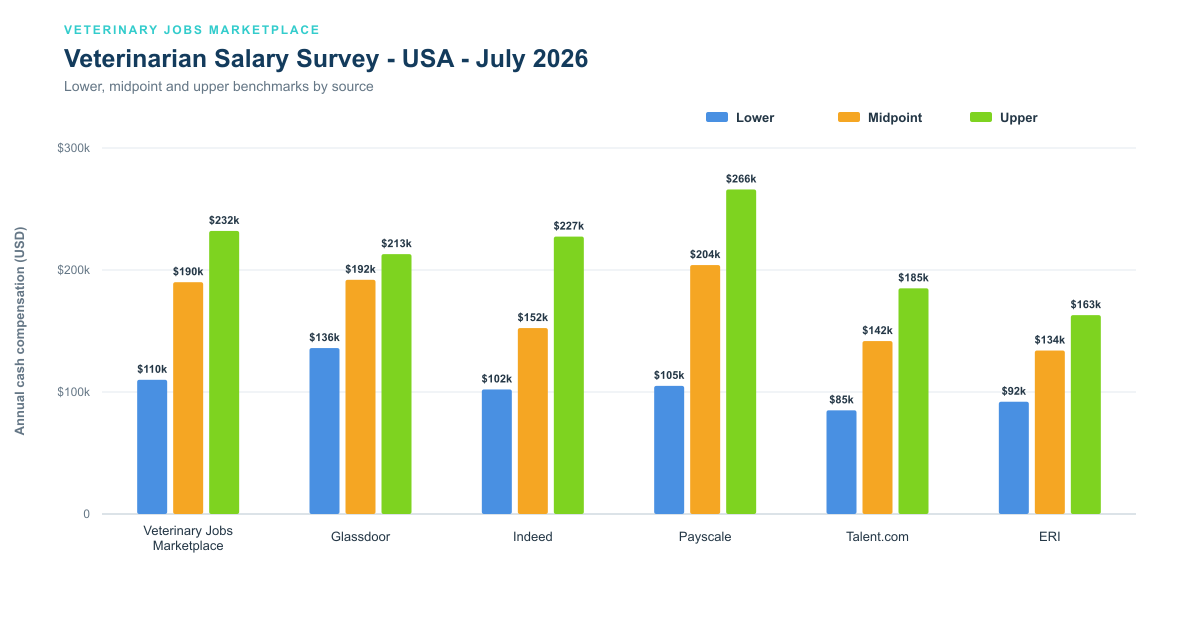
- The July benchmarks place the lower range at $110,000, the midpoint at $190,000, and the upper range at $232,000. These figures provide a useful current reference when setting a salary for a new role or reviewing whether existing salaries remain aligned with the market.
🩺 For job seekers
- Use the lower, midpoint, and upper benchmarks to understand where a salary sits within the broader market range. They provide a practical starting point for assessing an opportunity or preparing for a salary conversation, rather than a fixed target for every role.
Market trend insights
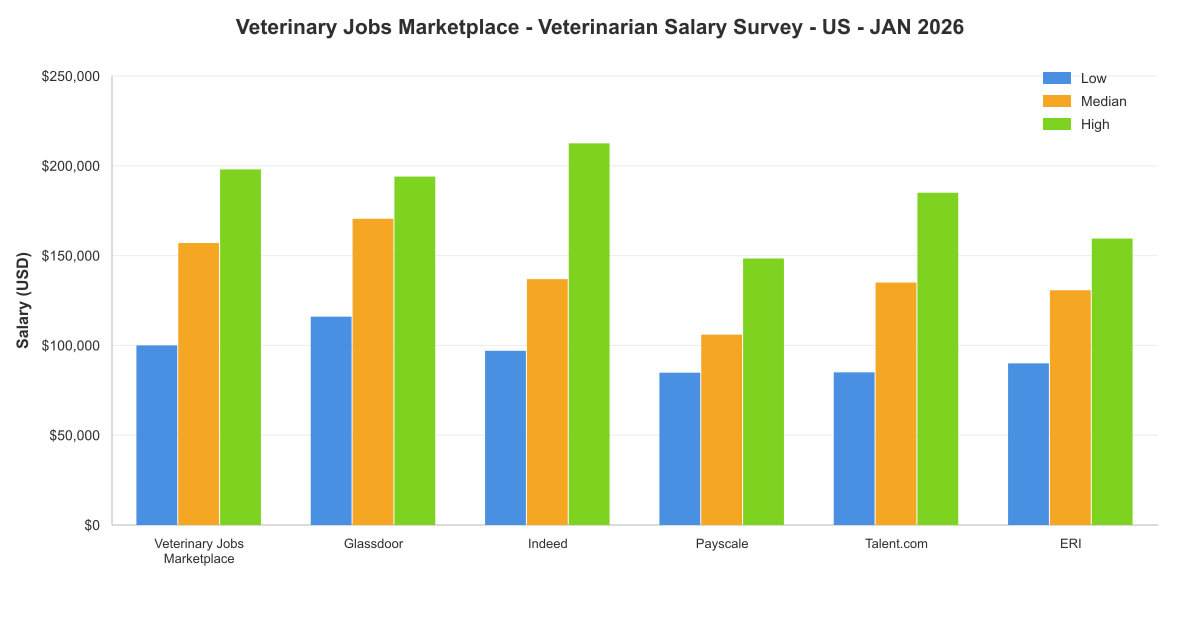
The July data shows upward movement across all three benchmarks. The lower range has moved from $100,000 in January to $110,000, while the midpoint has increased from $157,000 to $190,000 and the upper range from $198,000 to $232,000.
The latest movement at the midpoint and upper end is more pronounced than in recent survey periods. Some of this may reflect the composition of the current sample, but the overall direction remains consistent with the broader upward trend in veterinarian salaries recorded over recent years.
Looking ahead, the latest benchmarks are best used as current guidance rather than a prediction of where salaries will move next. Employers should ensure they are not relying on outdated market reference points, while veterinary professionals should use the figures to begin informed salary discussions and continue watching whether the latest levels are sustained in future surveys.
Five-year trend insights
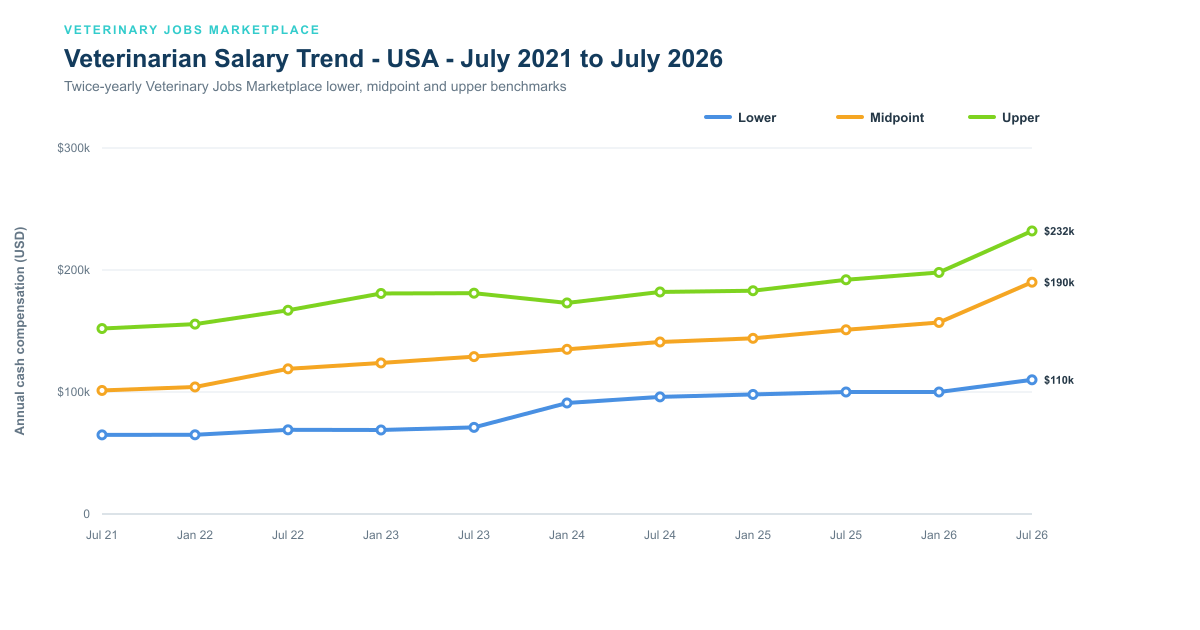
Veterinary Jobs Marketplace has now captured more than five years of comparable veterinarian salary data, providing a clearer view of how the market has developed beyond the movement seen in any single six-month period.
Across the full series, the lower benchmark shows the most consistent upward movement, particularly from 2023 onward. The midpoint has also risen steadily, while the upper benchmark has followed a less even path, with periods of relative stability followed by renewed increases.
Taken together, the five-year view shows that veterinarian salary benchmarks have shifted materially higher rather than simply fluctuating around a stable base. Individual survey periods may move more sharply than others, but all three benchmarks now sit substantially above their July 2021 starting points.
United States – January 2026
United States – July 2025
United States – January 2025
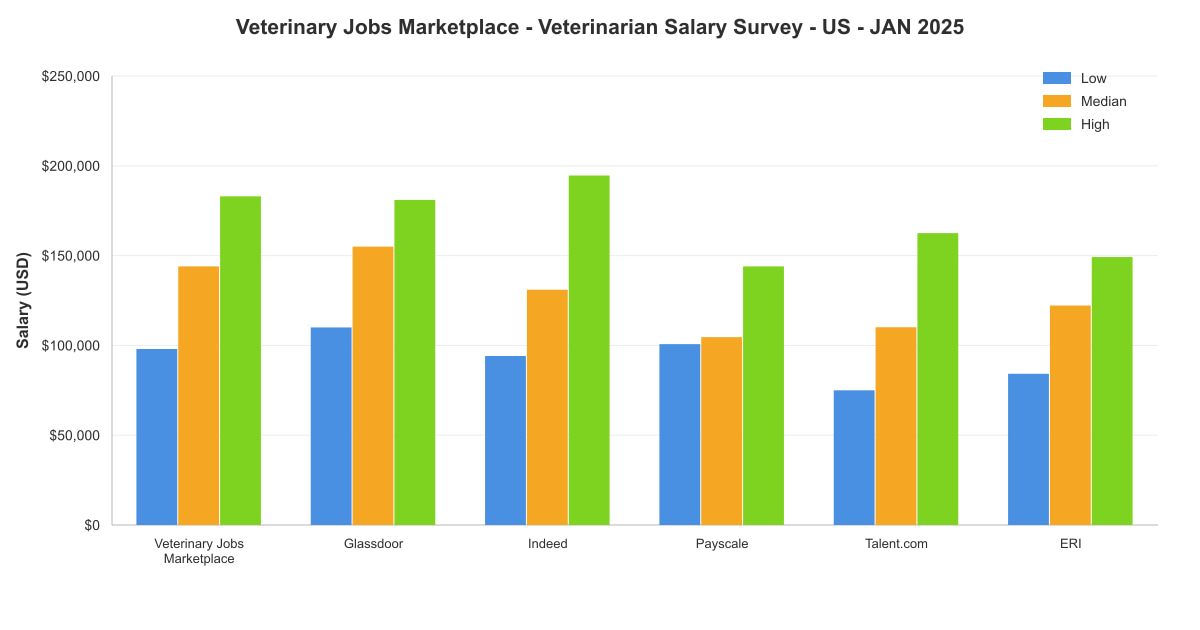
United States – July 2024
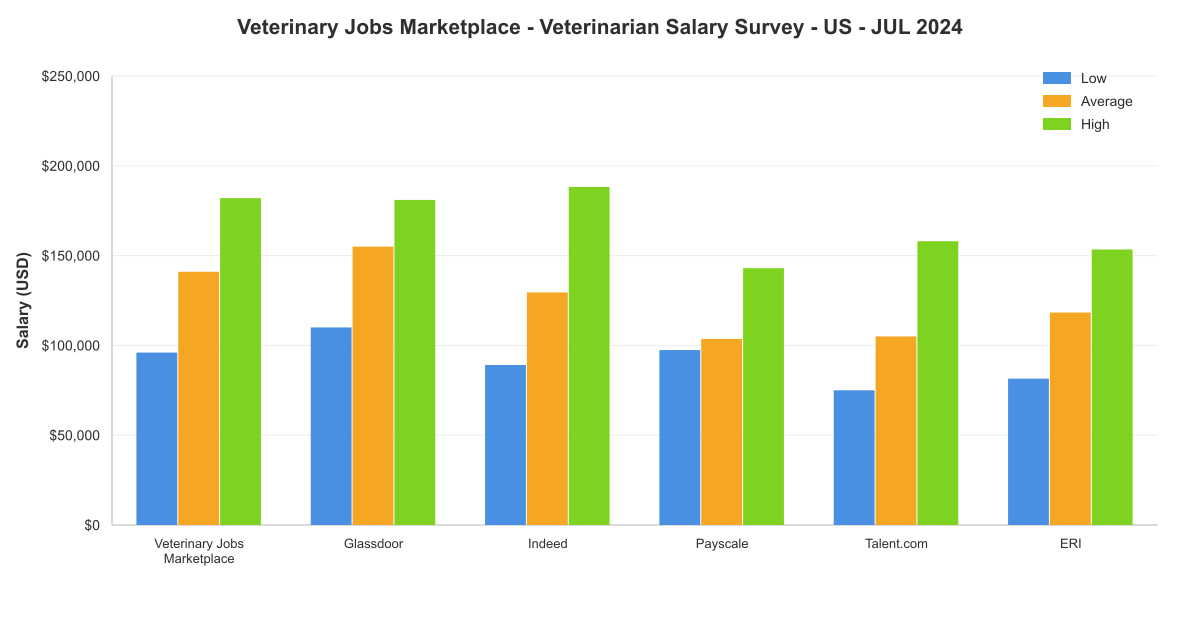
United States – January 2024
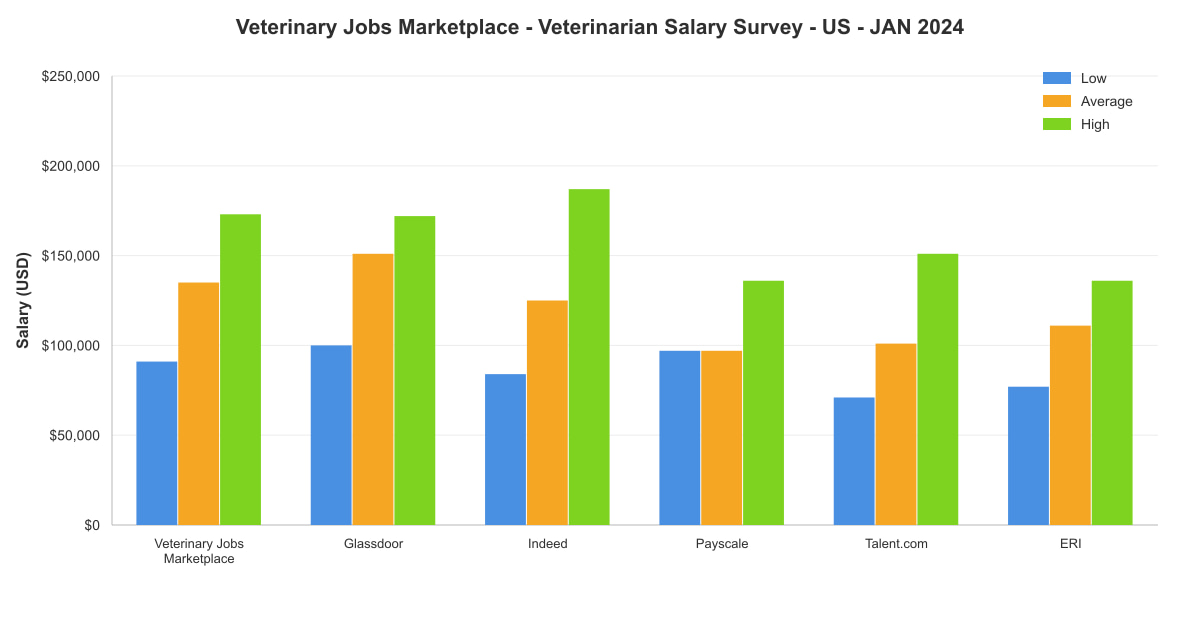
United States – July 2023
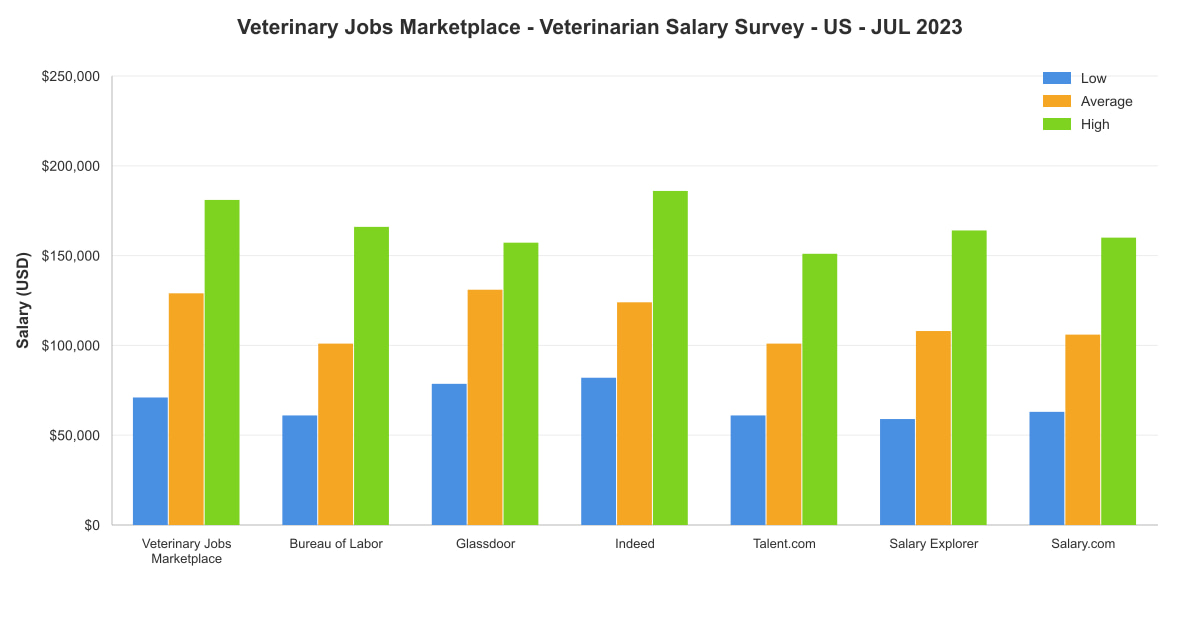
United States – January 2023
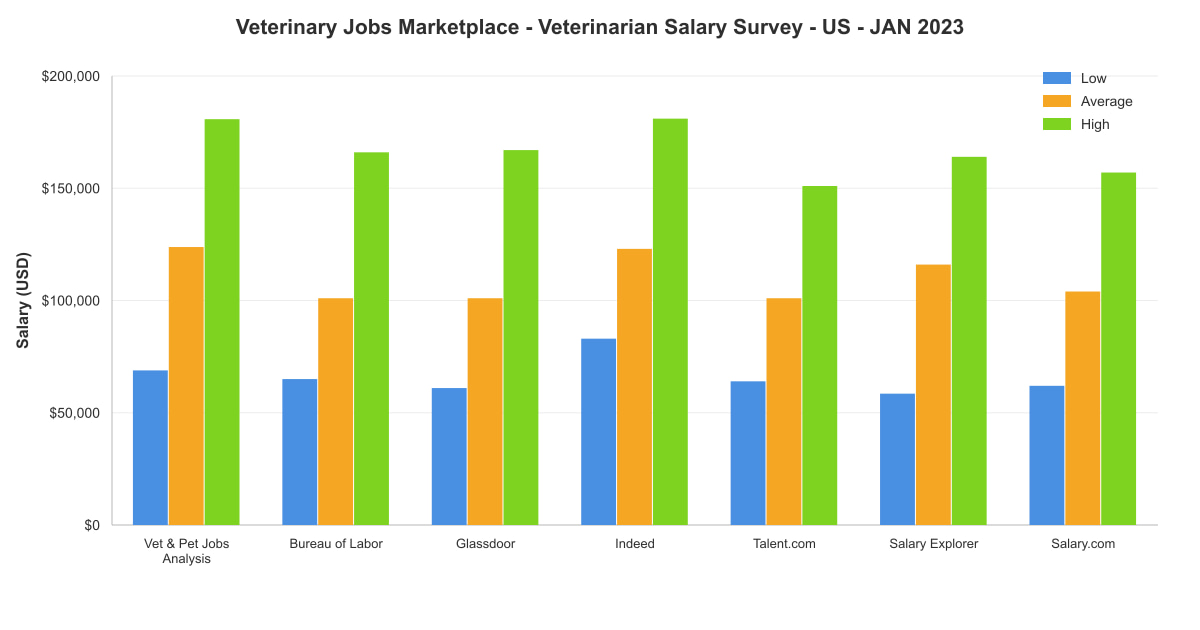
United States – July 2022
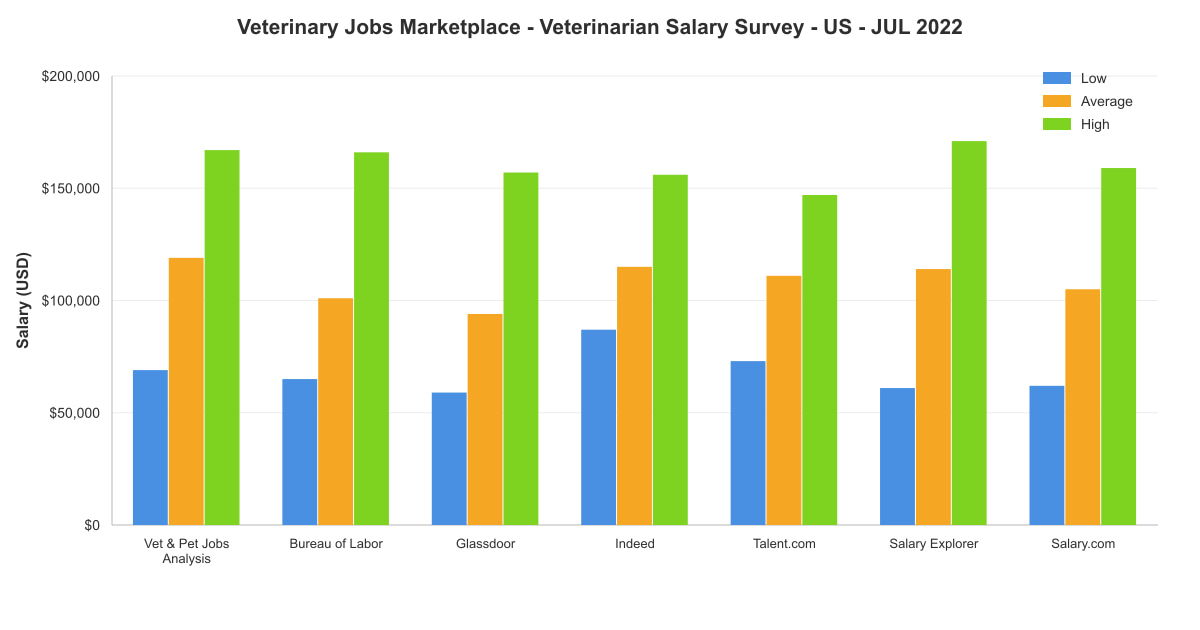
United States – January 2022
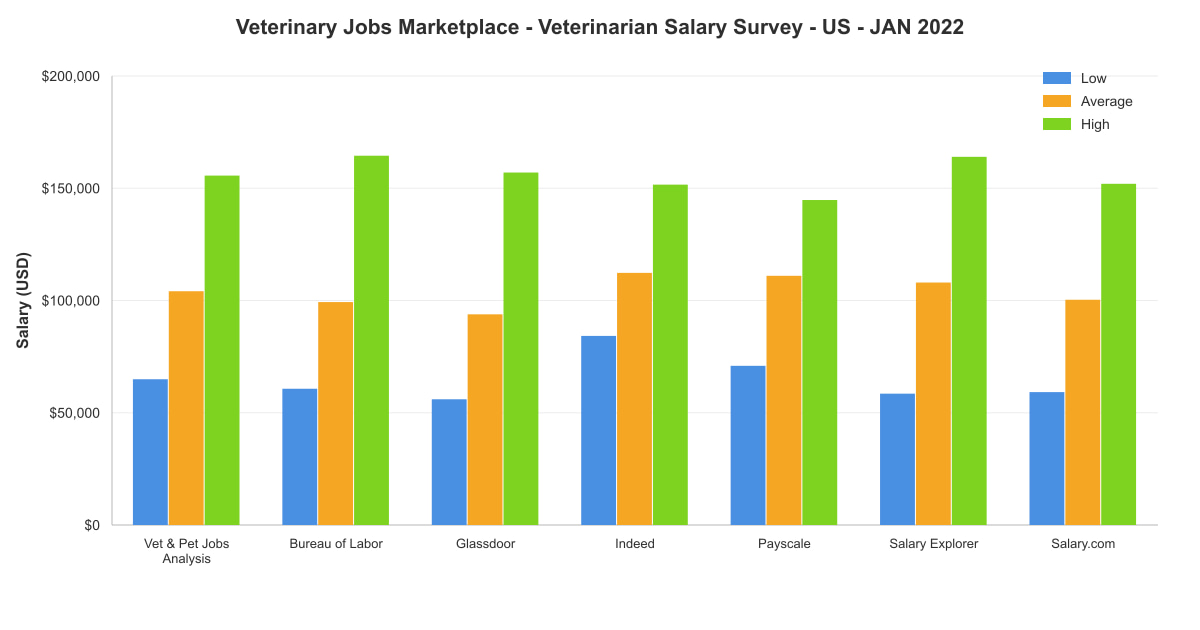
United States – July 2021
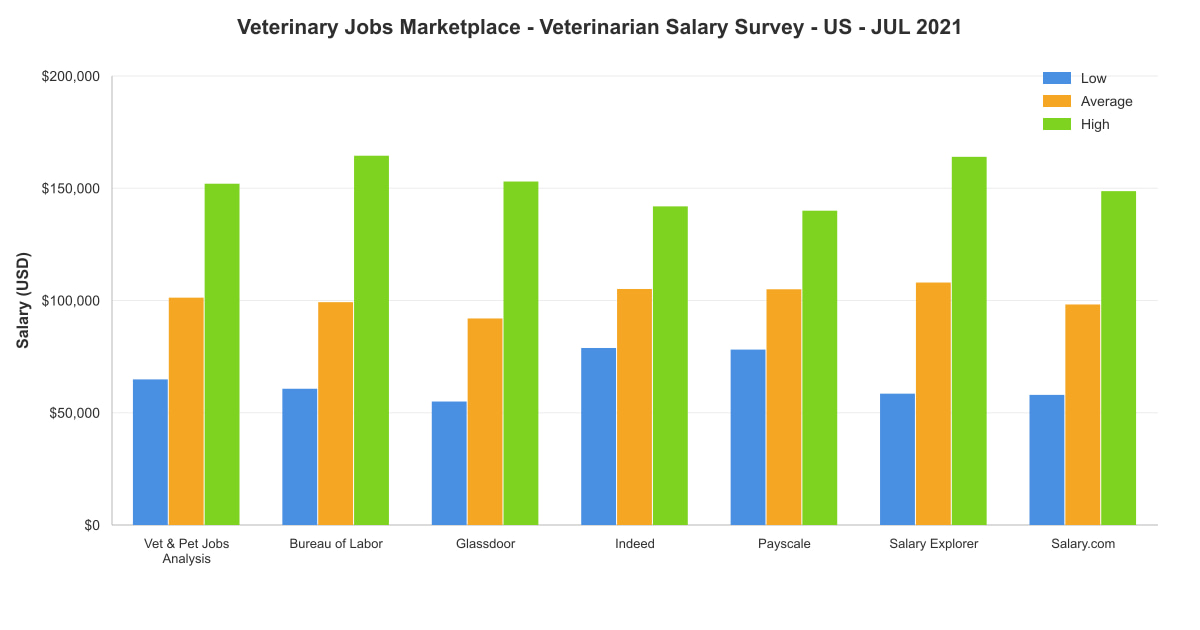
United States – January 2021
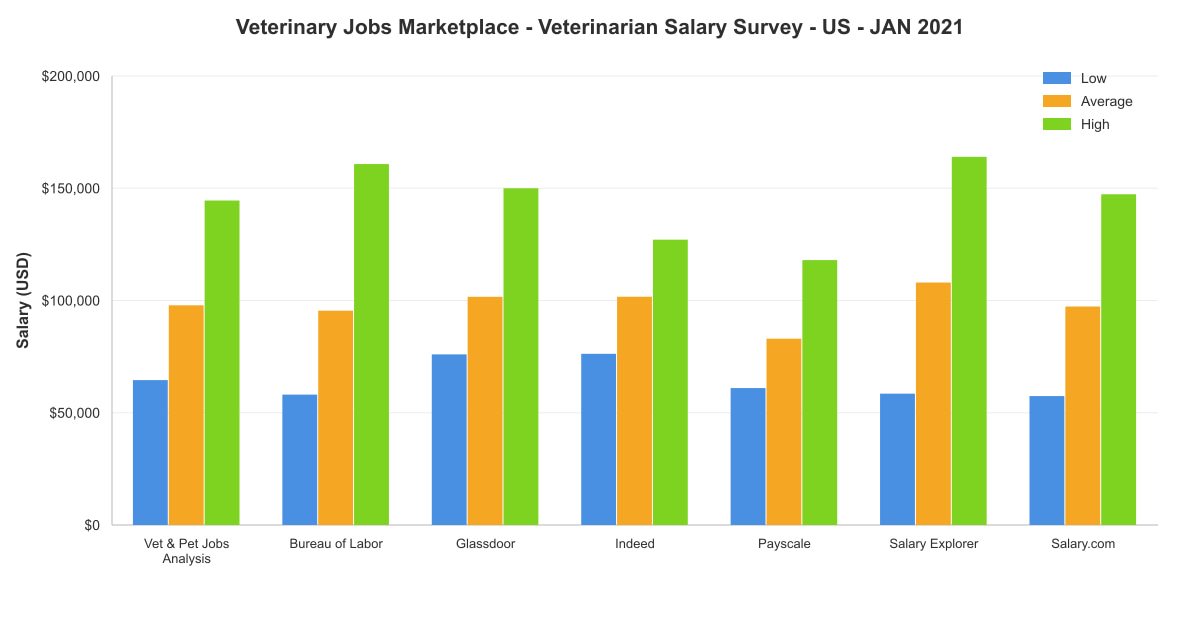
United States – July 2020
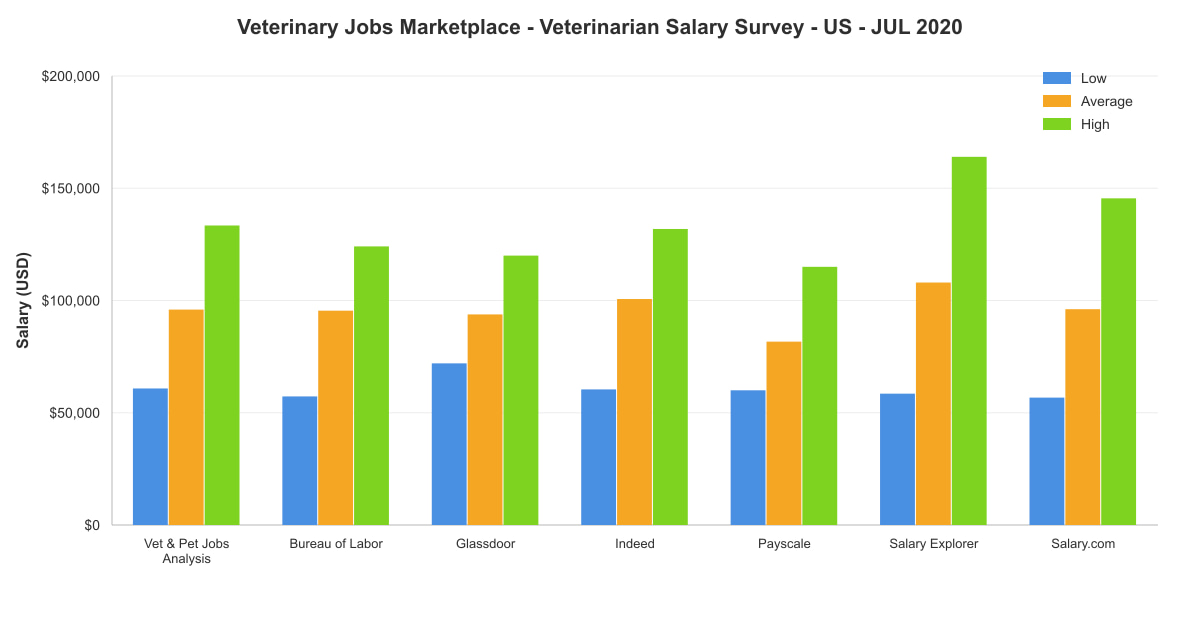
United States – January 2020
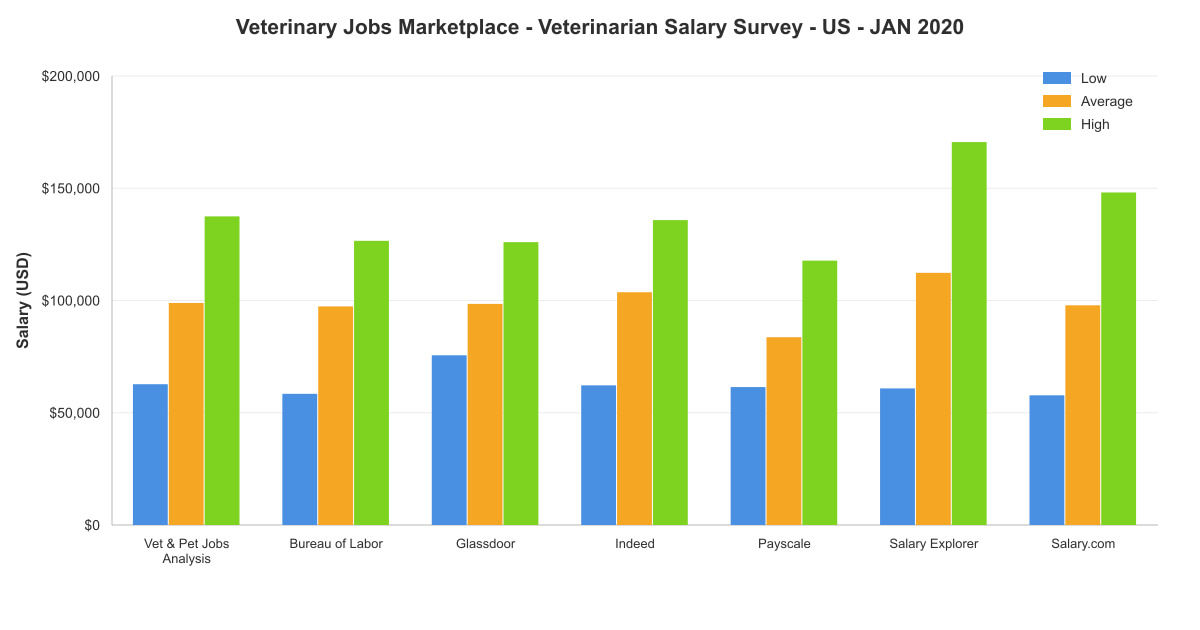
Methodology
About Our USA Veterinarian Salary Survey
We compile this survey twice yearly, in January and July, to give you a snapshot of the veterinary job market. Our data comes from a mix of public sources and our own research, offering a broad view of salary trends for both employers and job seekers.
What These Figures Include
The salaries shown represent cash compensation, typically including base salary and performance bonuses. They don’t include sign-on or retention payments, and they don’t cover benefits such as health insurance, CE stipends, 401(k) contributions, or other non-cash elements of a total compensation package.
Keep in mind that these figures are averages and don’t account for individual factors like specific qualifications, years of experience, areas of expertise, or location. Think of it as a starting point for understanding the market rather than a definitive guide for any particular role.
Understanding the Salary Ranges
Our data focuses on General Practice, Small Animal Veterinarians in their early career stage (1-5 years of experience). For a more comprehensive picture, consider these adjustments for different roles and experience levels:
- More Experienced Vets (5+ years): Add 25%+ to the figures
- Surgery-Focused Roles: Increase by 35% or more
- Specialty Fields: For roles in Emergency, Referral, Surgical, Internal Medicine, Oncology, Ophthalmology, and other specialties, expect salaries to be 50% higher or more
About Us
Veterinary Jobs Marketplace
Making connections matter…
A global community where the best veterinary professionals and practices find each other.
Explore our Regions:
Note: Glassdoor, Indeed, Payscale, Talent.com, and ERI – Economic Research Institute are business entities that publish publicly available information about salary data. We present these publicly available materials in fair use in a single location together with our own data as research to advance the understanding of the range of salary levels for Veterinarians in the United States. These business entities have not endorsed this Veterinarian Salary Survey nor any implication that may or may not be derived from the materials.
